
As the U.S. healthcare system transitions toward value-based care, the benefits of remote patient monitoring (RPM) have shifted from being a technological luxury to a clinical necessity. Recent research from the Mayo Clinic emphasizes that RPM is has moved from a pandemic-era stopgap to a permanent pillar of long-term chronic disease management. For healthcare organizations, it essential to understand how RPM is improving patient outcomes, reducing systemic costs, and optimizing reimbursement pathways.
This article breaks down the top three benefits of remote patient monitoring, with recent data and real-world outcomes, and provides insight into challenges and solutions for successful RPM implementation.
An Overview of the Benefits of Remote Patient Monitoring
The primary clinical advantage of RPM is the shift from reactive to proactive and preventive care. Traditional healthcare models often rely on office visits every 6 to 12 months, which leaves dangerous gaps in patient data. By capturing real-time physiological data outside the clinic, RPM enables clinicians to intervene the moment a vital sign trends toward a danger zone
Several benefits of remote patient monitoring include:
- Improved timeliness of care.
- Increased revenue (monthly Medicare reimbursements.)
- Ability to treat more patients.
- Reduced wait times.
- Patient health histories are more accurate.
- Improved patient-physician relationships.
- Increased patient retention.
- Better care in between appointments.
- Ability to change prescriptions and treatment plans right away.
- Reduced emergency room traffic, hospital admissions, and overall healthcare costs.
Benefits of Remote Patient Monitoring in Proactive care
Recent studies indicate that this proactive approach significantly impacts high-burden conditions.
- Cardiology and Sepsis Outcomes: Implementation of AI-based early warning systems in RPM frameworks has been associated with significant mortality reductions (up to 15-25%) and a 18% decrease in ICU length-of-stay.
- Hypertension Control: A 2026 retrospective cohort study found that patients with “adequate” blood pressure readings (at least 3 per week for 70% of the program duration) had a 15% higher prevalence of hypertension control within 12 weeks.
- Chronic Wound Care: Advanced bioelectronic interfaces now allow for real-time monitoring of pH and oxygenation, providing the synergy of monitoring and targeted stimulation to improve healing outcomes.
The following sections cover additional benefits of remote patient monitoring that include: decreased costs, improved patient outcomes and efficient workflows for healthcare teams.
Benefit #1: Decreased Healthcare Costs
A significant benefit of RPM is that it can help reduce total healthcare costs. Chronic diseases such as hypertension, diabetes, and congestive heart failure are the leading causes of death and disability nationwide and account for a significant portion of total healthcare costs. The nation’s healthcare spending grew 9.7 percent in 2020 to $4.1 trillion, which is $12,530 per person.
Medicare recognizes that remote patient monitoring can help reduce healthcare costs by focusing on prevention and early intervention of chronic diseases. To incentivize more practices to implement remote patient monitoring, Medicare introduced 5 CPT codes for RPM services. These codes pay for device setup, data collection, interpretation, and processing.
Remote patient monitoring can be used to prevent disease onset, identify disease early, promote proper management, and reduce symptoms. For example, when remote blood pressure monitoring was used for heart failure, patients and providers saw cost savings by reducing the need for extensive medical interventions. By focusing on preventative care and early intervention rather than treatment, patients can significantly reduce their chances of a costly trip to the emergency room, hospitalization, or surgery.
Benefit #2: Improved Patient Outcomes
Another significant benefit of remote patient monitoring is that it boosts patient engagement. The current healthcare system relies too heavily on patients’ ability to self-manage their health. Remote patient monitoring is focused on improving care between clinic visits, encouraging patients to be more active in managing their health. Research shows that RPM has become an asset in value-based care models and aids in improving HEDIS measures and STAR Ratings.
Because patients are accountable for taking their measurements regularly, they know what range is normal for them and when to seek medical attention. Gradually, patients better understand how lifestyle choices like diet, physical activity, and smoking influence their health.
Remote patient monitoring helps patients feel supported in managing their conditions. They know their healthcare provider will be alerted in real-time if the reading is abnormal or concerning and can act accordingly. Ultimately, patients will feel more satisfied with their care, develop better relationships with their healthcare providers, and be more committed to their health.
Benefit #3: More Efficient Clinic Workflow
Another benefit of remote patient monitoring is that it allows clinicians to care for more patients, generating more revenue and streamlining workflow. The patient can complete many tasks from home, such as measuring blood pressure, weight, or blood glucose levels. Not only is this more comfortable for the patient, but it also allows clinicians to spend their time more efficiently.
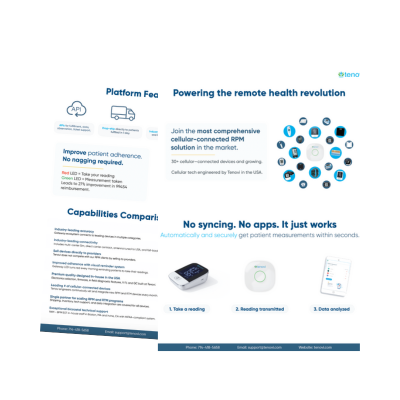
A common concern is that patients may struggle to use the remote monitoring device. Remote patient monitoring utilizes cellular or Bluetooth technology to send data automatically, securely, and accurately in real-time. Additionally, Tenovi FDA-cleared RPM devices are incredibly user-friendly and easy to set up, allowing physicians to focus more on each patient and less on administrative tasks.
Regular measurements will accumulate health data to help clinicians better understand their patients’ conditions. This optimizes the level of care by allowing clinicians to identify complications early and adjust treatment plans if necessary.
RPM Challenges and Solutions
While the positive impact of RPM can be seen with reduced rehospitalizations and shorter hospital stays, some reported challenges with remote patient monitoring include integrating into clinical workflow.
To drive greater RPM adoption and create more sustainable remote patient monitoring programs, a 2024 study recommends the following strategies for addressing workflow challenges:
- Provide comprehensive training on building digital literacy skills and health literacy education for patients and clinical staff.
- Developing optimized, replicable clinical workflows and protocols for integrating RPM data review and triage into daily practice.
- Implementing targeted strategies and support to ensure equitable access to RPM regardless of demographics like age, income, and technology access.
- Revising payment policies, reimbursement models, and financial incentives to spur investment in RPM adoption and make it profitable for practices.
The Benefits of Remote Patient Monitoring Outweigh the Risks
The number of individuals with chronic conditions is rapidly increasing. The National Center for Chronic Disease Prevention and Health Promotion (NCCDPHP) reports that nearly six in 10 adult Americans have at least one chronic disease, and four in 10 have two or more chronic conditions. With our current healthcare model, this number is only expected to rise. Remote patient monitoring offers an innovative solution to optimize the accessibility and efficiency of quality healthcare.
Are your healthcare partners ready to reap the benefits of remote patient monitoring? Schedule a free demo and meet a better RPM experience. Tenovi Cellular Gateway and devices make monitoring vital signs and sharing results easy, safe, and secure.