Research

Evidence-based insights, updates, and use cases from Tenovi’s work in remote patient monitoring (RPM), remote therapeutic monitoring (RTM), and value-based care models.

What is heart failure remote monitoring?

How Heart Failure Remote Monitoring Reduces Hospital Readmissions & Inpatient Services

Cardiovascular diseases are a major health concern, especially for geriatric patients and those in rural communities. New healthcare solutions are required to ensure better management and care. This article explores the pivotal role of heart failure remote monitoring for cardiovascular health and how it has been shown to reduce hospital readmissions and inpatient services.  Heart […]

How Heart Failure Remote Monitoring Reduces Hospital Readmissions & Inpatient Services Read More »


New research wearable cholesterol monitor

New Wearable Technology: Non-Invasive Cholesterol and Lactate Monitor

Wearable technology is advancing rapidly. An innovation from researchers in Singapore marks a significant step forward in noninvasive health monitoring. This article explores the development of a stretchable hydrogel-based wearable cholesterol monitor that also monitors lactate levels directly from the skin, eliminating the need for blood or other biofluid samples.  We examine how this wearable

New Wearable Technology: Non-Invasive Cholesterol and Lactate Monitor Read More »

what's the latest in heart failure devices?

CardioMEMS: An Innovative Heart Failure Device for Remote Patient Monitoring

Heart failure is a chronic condition that affects millions worldwide, necessitating ongoing management and frequent hospital visits. However, recent technological advancements have enabled monitoring heart failure patients remotely. One such breakthrough is the CardioMEMS Heart Failure (HF) System, a heart failure device. This article explores how the CardioMEMS system functions, its benefits, and a recent

CardioMEMS: An Innovative Heart Failure Device for Remote Patient Monitoring Read More »

remote patient monitoring trends

10 Remote Patient Monitoring Trends & Facts You Should Know

Remote patient monitoring (RPM) is at the forefront of a shift in healthcare towards digital medicine and automation technologies. With these technological advancements and growing demands for accessible, efficient care, RPM is one important component. This article delves into the latest remote patient monitoring trends, examining data from recent surveys, studies, and reports that highlight

10 Remote Patient Monitoring Trends & Facts You Should Know Read More »

acute hospital at home care with remote patient monitoring

The Impact of Remote Patient Monitoring on Acute Hospital-At-Home Care

The acute hospital at home (HaH) program is a healthcare model where patients receive acute care services in their homes rather than in a traditional hospital setting.  The concept of HaH has evolved, driven by advancements in medical technology, changes in healthcare delivery models, and a focus on patient-centered care. Acute hospital at home programs

The Impact of Remote Patient Monitoring on Acute Hospital-At-Home Care Read More »

latest research in remote monitoring for cirrhosis

Leveraging Remote Monitoring to Enhance Cirrhosis Care

Biometric data is key in managing chronic liver disease and cirrhosis. Remote health technologies can be used to track biometric data and serve as an early warning system for complications in liver disease patients. This article discusses remote patient monitoring for cirrhosis and describes current research into patient satisfaction, reduced hospital readmissions, and quality of

Leveraging Remote Monitoring to Enhance Cirrhosis Care Read More »

research in remote kidney monitoring

Remote Kidney Monitoring in Critical Care Settings

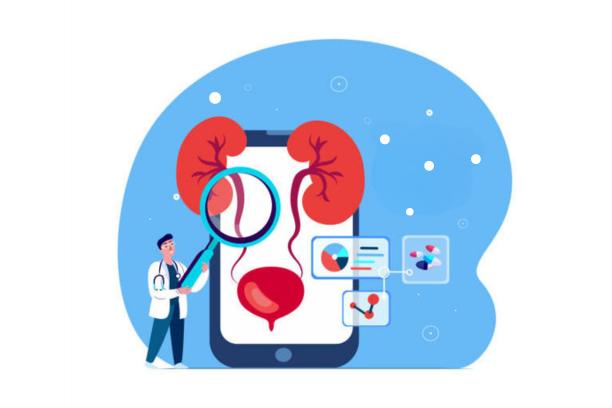
In critical care nephrology, remote kidney monitoring is bridging the gap between hospital-based intensive care and post-discharge patient management. This approach enhances how acute kidney injury (AKI) cases are handled both during hospitalization and in the crucial weeks following discharge. In this article, we’ll explore remote kidney monitoring in critical care settings and how it

Remote Kidney Monitoring in Critical Care Settings Read More »

research in telemedicine for addiction treatment

Telemedicine for Addiction Treatment: Improving Opioid Use Disorder Care Engagement

Addiction is a complex chronic condition that requires comprehensive treatment. Traditional in-person treatment for addiction may be inaccessible for some individuals. Telemedicine for addiction treatment is one solution that can be a convenient and affordable alternative. This article discusses a new study published in the Journal of Substance Use and Addiction Treatment that suggests that

Telemedicine for Addiction Treatment: Improving Opioid Use Disorder Care Engagement Read More »

RPM research round this week covers telehealth for cancer care.

Telehealth for Cancer Care: Improving Access and Reducing Costs

Telehealth for cancer care is now a key component in modern oncology. It offers patients increased access to healthcare providers and specialists, mainly when in-person care is challenging or impossible. It also expands remote health service options for care, such as communicating with their medical teams and managing their treatment journey. This article highlights two

Telehealth for Cancer Care: Improving Access and Reducing Costs Read More »